Stephen Townsend: A Life on the Texas Frontier
Charter member of Lafayette Lodge No. 34 — soldier of San Jacinto, first sheriff of Colorado County, and one of the men who built Fayette County out of open prairie.
By Jeff Messer, WM, Lafayette Lodge No. 34·March 23, 2026
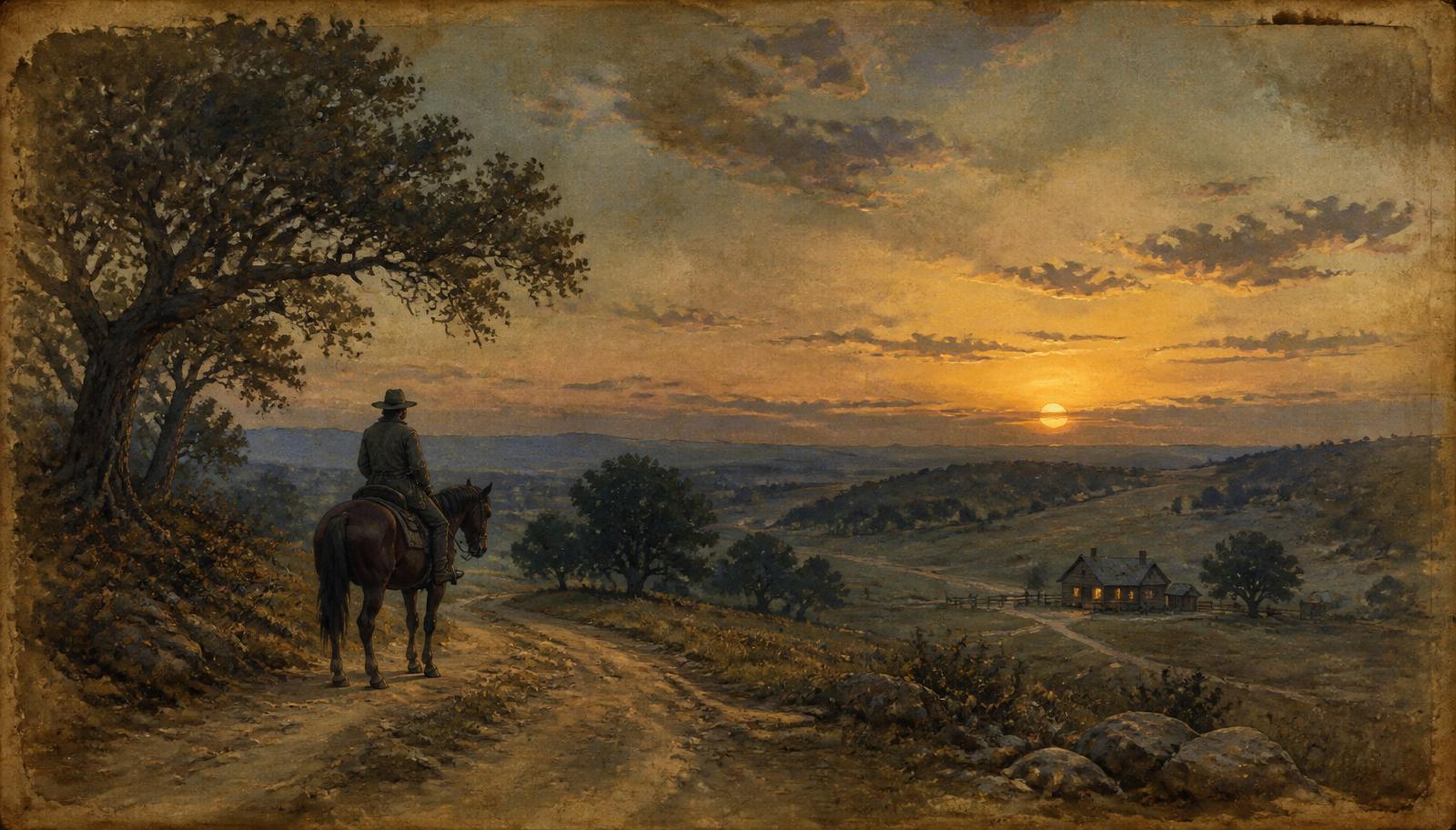
Stephen Townsend rode with William P. Smith at San Jacinto, wore the first sheriff's badge of Colorado County, helped charter three Masonic lodges in the Republic-era Hill Country, and was murdered on the street in Round Top in October of 1850. This is his story, drawn from lodge minutes, county records, and the newspapers of his day.
Stephen Townsend was born in Marlboro County, South Carolina, in the year 1800. During the early decades of the nineteenth century, as the young United States continued to expand westward, many families sought new opportunities on the frontier. The Townsend family was among those drawn by the promise of land and prosperity. In the 1820s they relocated to Jefferson County, Florida, which at that time was still a developing frontier region following Florida's transfer from Spanish control to the United States.
It was in Florida that Stephen met the woman who would become the love of his life, Sabrina Robison. The two were married on February 27, 1827. Sabrina was the sister of Joel Walter Robison, another early and important settler who would later play a role in the history of Fayette County, Texas. Together Stephen and Sabrina built a large family. Sabrina gave birth to eleven children, though life on the frontier was harsh and uncertain. Five of those children tragically passed away before reaching the age of five, a sorrow not uncommon in that era but nevertheless deeply felt by the family.
Stephen's affection for Florida remained strong throughout his life. Evidence of this attachment can be seen in the name he gave one of his daughters, Florida Ann Townsend. This fondness would later extend even further, influencing the names of institutions he helped establish in Texas.
To the Republic of Texas
By the late 1830s, like many other settlers seeking opportunity in the newly emerging Republic of Texas, Stephen and much of his family moved westward again. They eventually settled in the area which is now Columbus, Texas. During this time Stephen was granted a headright of land in San Felipe, a common method used by the Republic of Texas to encourage settlement. Later he purchased additional land along the historic La Bahía Road on the south side of Cummins Creek, near present-day Round Top, Texas.
The La Bahía Road was one of the most important travel routes in early Texas, connecting settlements such as San Felipe, La Grange, and Bastrop. By settling along this route, Stephen positioned himself in the center of frontier activity. Establishing his home a few miles south of what is now Round Top, on what today is called Florida Chapel Road, he immediately set about building a new life for himself and his growing family.
Stephen's admiration for Florida continued to manifest itself in the names of institutions he helped establish in the area. He named the Presbyterian church he founded Florida Chapel, and the local Masonic lodge also carried the Florida name. Through these choices, he left a lasting reminder of the place where he had first built his life and family.
San Jacinto
The Townsend family played a remarkable role in one of the most important events in Texas history — the Battle of San Jacinto in 1836. Nearly twenty of Stephen's relatives, either by blood or marriage, were present in the Texas army during the campaign. Stephen himself was part of the group led by William P. Smith. Initially, his group remained at Harrisburg before moving toward the San Jacinto battlefield.
At first Stephen was assigned to remain behind to assist with caring for the wounded and managing supplies. Such duties were critical to the army's survival and effectiveness, though they often receive less recognition than those who fought directly in battle. Eventually Smith and his soldiers were moved forward to the San Jacinto battlefield where Stephen took part in the historic engagement that secured Texas' independence from Mexico.
Building a Community in Fayette County
Following his return from San Jacinto, Stephen devoted himself to establishing a stable community in his new home in Fayette County. A man driven by service and responsibility, he became deeply involved in civic life. He was among the early members of the Texas Rangers and served as the first sheriff of Colorado County in 1837.
His role as county sheriff marked the beginning of a long and sometimes contentious relationship between the Townsend family and certain residents of Colorado County. The later Townsend–Stafford feud would become a notable episode in regional history, though that story extends beyond the scope of Stephen's personal life and final years.
Stephen was also deeply involved in Freemasonry, which was rapidly spreading across Texas during the Republic era. In 1847 he became a charter member of Lafayette Masonic Lodge No. 34 in La Grange. It was there that he formed a close association with John Murchison, a fellow Mason whom Stephen greatly respected and would later honor by helping establish a lodge bearing his name.
In 1848 Stephen and several others chartered Florida Masonic Lodge No. 46 in Round Top. Stephen served as the Charter Worshipful Master, demonstrating the respect he commanded among his peers. It is believed he played a key role in guiding his brother-in-law Joel Robison through the Masonic degrees. Joel was likely the first Entered Apprentice initiated at Lafayette Lodge No. 34 and later completed his degrees at Florida Lodge No. 46.
Florida Lodge No. 46, as it existed, held its meetings in what is today known as Lulu's restaurant and hotel in Round Top, specifically in what is now the upstairs dining room located just off the square in present-day Round Top. The building originally belonged to the Schultze brothers, and records confirm that one of them, Howard Schultze, was also a member of the lodge.
The history of Florida Lodge No. 46 is somewhat unusual. Rather than maintaining a clearly documented list of original charter members, surviving records show a mixture of early charter members and later additions to the lodge roster. Ultimately, the lodge ceased operations in the 1870s as waves of German Lutheran settlers began purchasing land from the original landowners in the region. Many among the new settlers were not supportive of Masonry, and membership gradually declined until the lodge was eventually demised.
In the early years of settlement, the Round Top area itself was commonly referred to as Townsend Settlement. Stephen and his extended family were so prominent that it would have been difficult for travelers or newcomers to pass through the area without encountering them.
Stephen also operated a stagecoach inn along the La Bahía Road. The inn served as an important stop where travelers could exchange tired horses for fresh ones, rest during their journey, and transfer freight. Given the heavy travel between San Felipe and Bastrop during that era, the inn would have been a busy and important establishment.
Temperance, Law, and the Fayette Association
As settlement expanded and lawlessness remained a constant threat, Stephen continued to play a leading role in maintaining order in the region. During the late 1840s and early 1850s his life became increasingly active on multiple fronts.
He was a founding member of the local Sons of Temperance group, an organization formed as part of the broader temperance movement of the 1840s. The Sons of Temperance operated as a fraternal society dedicated to promoting abstinence from alcohol and encouraging moral discipline among its members. There are not many local records for the Sons of Temperance; however, it should be noted this was a large movement in the 1840s across the United States, starting originally in New York City.
Stephen was also associated with an organization known as the Fayette Association. This group worked in support of law enforcement efforts to bring criminals to justice in the growing but often lawless frontier communities. Few records survive regarding the association, but notices printed in newspapers in Brenham and Houston indicate that it included several prominent citizens of Fayette County, many of whom were also Freemasons.
The Fayette Association also pledged to defend the reputations of individuals who had been wrongly accused or slandered. In this way it acted both as a law-and-order group and as a protective society for respected citizens. The Association also is mentioned in looking into character references of several locals and ultimately clearing their names after investigation.
Murchison Lodge No. 80
Stephen was also instrumental in the founding of Murchison Masonic Lodge No. 80 in Hallettsville. The lodge was named in honor of his friend and fellow Mason John Murchison, who had served as the Chartering Worshipful Master of Lafayette Lodge No. 34. Murchison died tragically from a self-inflicted gunshot wound on July 28, 1849, while traveling to California during the Gold Rush near San Bernardino. It is reported Murchison's party was the best supplied and organized of any which left Fayette County headed west. Other groups from the area disbanded long before making it to California for lack of supplies and infighting.
Stephen attended early meetings of the lodge and usually had several Fayette County Masons with him from both Lafayette No. 34 and Florida No. 46. In reviewing early minutes and the request for a charter, it is not mentioned why they chose Murchison as the namesake; it is my belief it was Stephen's deep friendship, and the respect for John's contributions to early Fayette County Masonry and education.
In 1850 Stephen filed a lawsuit in Fayette County against Hugh White, who had allegedly failed to pay a bond owed to Isaac Hill, Hamilton Ledbetter, and Otto von Roeder. The bond had been entered into by Melvina White for the purchase of an enslaved pregnant woman and a boy, illustrating the harsh realities of the era's economic and social systems. Isaac Hill, a Mason, had passed away and there were several who were looking after his family's affairs.
Through his involvement with the Fayette Association, Stephen and others were instrumental in bringing members of criminal gangs to justice, including those associated with the notorious Short Brothers gang of rustlers. These criminals were known for stealing cattle, hogs, horses, chickens, and virtually anything of value that could be taken. One captured gang member became the first inmate delivered to the newly established state penitentiary in Huntsville. The Fayette County sheriff was accompanied by five local men on that escort, and it is widely believed the Fayette Association played a significant role in the effort.
Although Stephen was not the formal leader of either the Fayette Association or the Sons of Temperance, his reputation as a soldier, lawman, and community leader made him a respected and influential member of both organizations.
October 29, 1850
On October 29, 1850, a man named John Haywood Vaughn rode into Round Top and was invited to a card game at Stephen Townsend's home. The following morning, sometime between seven and ten o'clock, Townsend, Vaughn, and several other men gathered at a local grocery store near one of the blacksmith shops in town, likely purchasing supplies and possibly sharing breakfast.
Townsend was speaking with Edward Hinkle in the street when an argument suddenly erupted between Vaughn and another man, reportedly involving a dispute over a horse race. During the heated exchange, a man named Jones shouted that Vaughn should be hanged, swung at him, and kicked Vaughn's horse. Townsend then struck Vaughn across the shoulder and face with an open hand to intervene. The context of the horse race is lost to history; however, it is noted Vaughn lost his last three dollars playing cards the night before.
The situation escalated quickly. Vaughn moved to the far side of his horse after the altercation became physical, then rushed toward Townsend and plunged a knife roughly six inches into Townsend's abdomen. After committing the attack, Vaughn fled toward a nearby group of Comanche Indians with whom he apparently had some prior relationship, seeking protection before eventually escaping toward Arkansas.
Stephen Townsend survived for approximately thirty hours after receiving the fatal wound before finally succumbing to his injuries.
One of Stephen's sons pursued Vaughn to Arkansas and successfully brought him back to Texas to face justice in Fayette County. It took a couple of years to get Vaughn back to Texas to stand trial for murder. When Vaughn was brought back to Fayette County there was a group who wanted him to be hung on sight, requiring him to be under twenty-four-hour guard while in custody before and during his trial. However, due to concerns that an impartial jury could not be seated locally, the presiding judge approved a change of venue. The trial was moved to Austin County and was held in the town of Bellville.
The trial itself drew little public attention in Bellville. Only a few witnesses testified, and their accounts were largely consistent aside from minor disagreements regarding the exact time of day the attack occurred. The lack of real detail other than the brief description presented here leaves more questions than answers.
The Missing Motive
Little is known about John Haywood Vaughn prior to his arrival in Round Top, and no earlier records of him appear in Fayette County. Because of this mystery, some have speculated that Vaughn may have been an assassin sent with the specific intent of killing Townsend. Given Stephen's long career in law enforcement and his efforts against criminal gangs, he certainly had enemies who might have wished him harm.
Several possible motives for the murder have been suggested. Hugh White may have had reason to wish Townsend dead to avoid the pending lawsuit. Members of the Short Brothers gang could also have sought revenge against the man who had helped pursue them. A third possible motive involved the Banton brothers and their expulsion from Lafayette Masonic Lodge. The Banton Brothers were expelled from Masonry for not paying their debts and questionable morality. Their property was held by the sheriff until it was sold at auction, and almost immediately after their expulsion, they left the area permanently.
In the absence of clear evidence, the truth may never be fully known. However, many historians believe that the Short Brothers gang had the strongest motive and likely played some role in the crime. Vaughn's mysterious arrival and his attempt to hide among local Indians lend weight to that theory. The Short Brothers were known to associate with the local Indian population and thus providing refuge for the outlaw Vaughn.
Buried Beneath the Oak
Whatever the true cause, the murder shocked the community. Stephen Townsend had been a soldier, lawman, Mason, civic leader, and pioneer who helped shape the early development of Fayette County. While I have read many newspaper articles, lodge minutes, and other items, Stephen was never called out as being memorialized in any way.
Today he lies buried beneath a large oak tree near the small white building of Florida Chapel, a quiet resting place for a man whose life was deeply intertwined with the early history of Texas. His grave is a simple pink granite flat stone with the Texas Ranger symbol as well as a square and compass accompanied by a red iron cross and a small Texas and American flag. His brother-in-law Joel Robison — the man responsible for bringing Santa Anna back to meet with Sam Houston — and Joel's wife were buried next to Townsend prior to being moved to the Texas State Cemetery in Austin in the 1930s.
More from The Living Archive
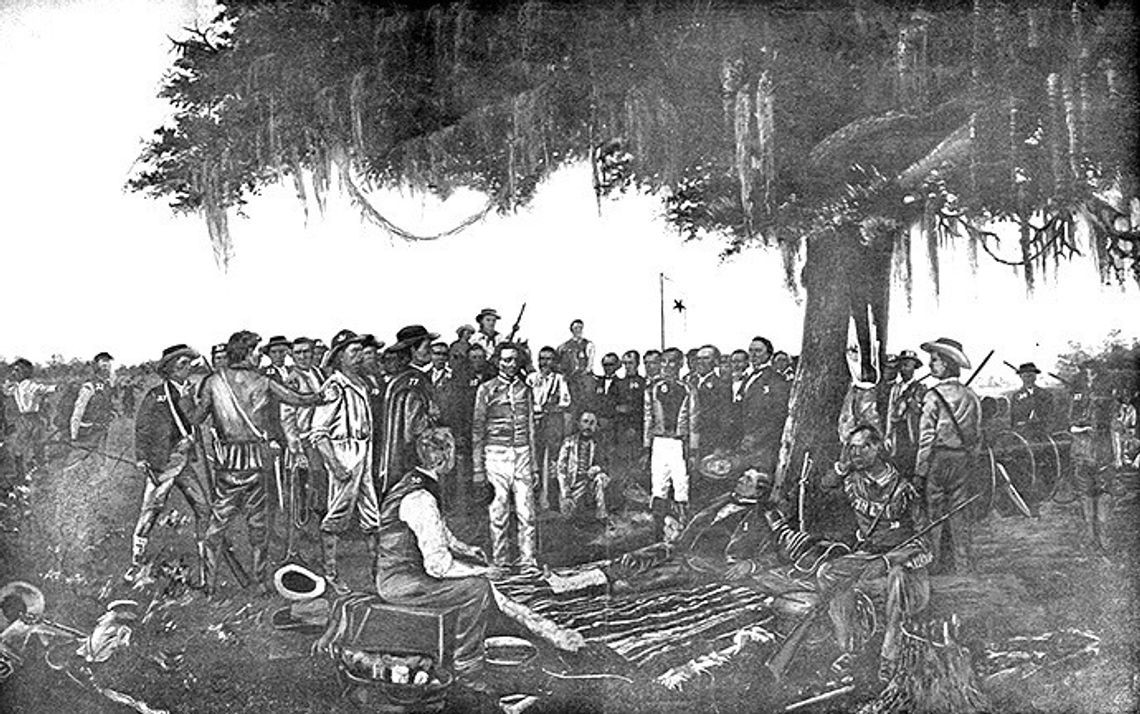
Joel Robison: The Fayette County Mason Who Captured Santa Anna
On the morning after the Battle of San Jacinto, a young Georgia-born patrolman named Joel Robison rode out to gather stragglers — and rode back with the President of Mexico on his horse. Robison would later settle in Fayette County, join Lafayette Lodge No. 34, and serve the Republic as one of Sam Houston's first Texas Rangers.
Read Article →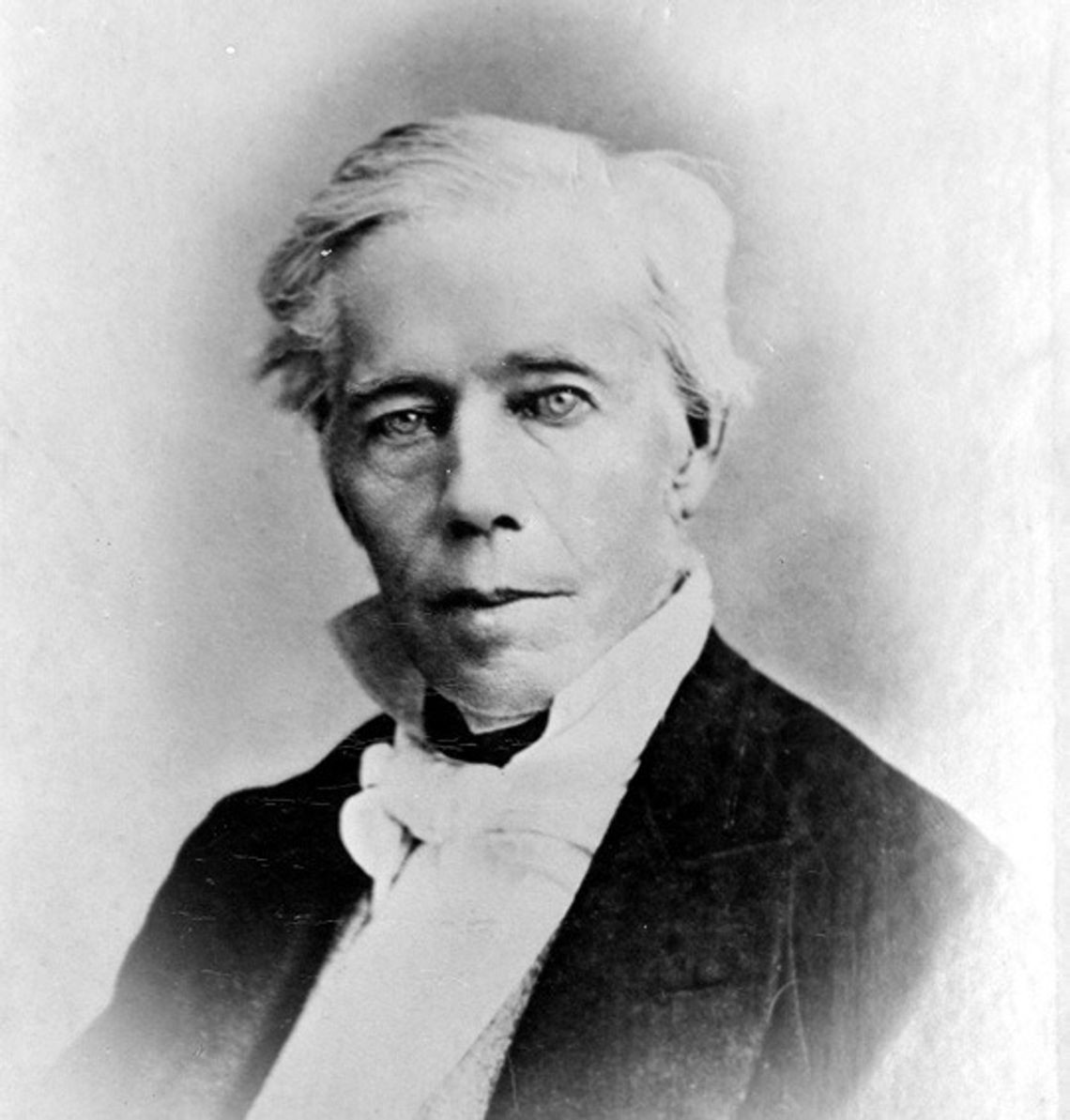
Swante Palm: The Scholar Who Helped Preserve Texas History
A Swedish immigrant who landed at Galveston in 1844, Swante Palm became a La Grange merchant, a charter member of Lafayette Lodge No. 34, an Austin postmaster, a knighted vice consul for Norway — and the donor of more than 10,000 books and images to the University of Texas, expanding the young school's collection by more than sixty percent.
Read Article →